


Most people assume height is locked in by genetics alone. That belief sounds neat, simple… and a bit misleading. What actually shows up in daily life looks different: posture collapses after hours on a phone, sleep gets cut short, meals lean heavily processed—and suddenly, the body never quite reaches what it could have.
In the United States, average height sits around 5’9” (men) and 5’4” (women) according to the CDC. Yet, posture alone can visually shift that number by 1–2 inches, which surprises many people after a few weeks of consistent movement.
So no, exercises won’t magically stretch bones after growth plates close. But what tends to happen is more subtle—and honestly, more practical: better alignment, less spinal compression, and a taller presence that actually shows up in photos, mirrors, and daily movement.
Key Takeaways
- Genetics determines baseline height, but posture and spinal alignment influence visible height.
- Daily stretching decompresses the spine, especially after long sitting periods.
- Core and back strength stabilize posture, preventing slouching.
- Consistency over intensity drives results, especially within 4–8 weeks.
- Sleep (8–10 hours), nutrition, and movement interact, not separately.
- Safe for teens and adults, if movements stay controlled and pain-free.
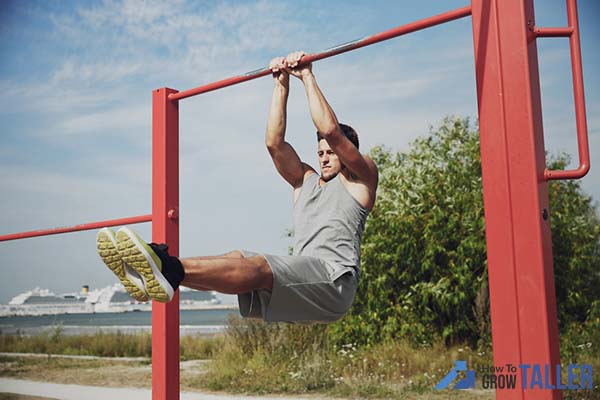
1. Hanging Exercise
This one feels almost too simple—but the effect is immediate.
Why it works: Gravity compresses the spine throughout the day. Hanging reverses that pressure, even if just temporarily.
How to do it:
- Use a doorway bar (common in US homes under $40)
- Hang for 15–30 seconds
- Repeat 3–5 rounds daily
What tends to happen after a week or two: the back feels looser, posture resets faster. Not dramatic, but noticeable—especially after long school or desk hours.
2. Cobra Stretch (Bhujangasana)
You know that stiff, rounded posture after scrolling for hours? This directly counters it.
Benefits:
- Improves spinal extension
- Opens the chest
- Strengthens lower back muscles
How to perform:
- Hold 20–30 seconds
- Repeat 4 times
There’s a subtle shift here—less hunching without consciously “trying” to stand straight all day.
3. Forward Bend Stretch
At first glance, this looks like a hamstring stretch. It’s not just that.
Why it matters: Tight hamstrings tilt the pelvis backward. That tilt drags posture down with it.
How to do it:
- Bend slowly from the hips
- Keep movements controlled
- Avoid bouncing
After a few sessions, posture feels less forced. That’s usually the first sign it’s working.
4. Pelvic Shift Exercise
This one rarely gets attention, which is odd considering how much it affects alignment.
Steps:
- Lie on your back, knees bent
- Lift hips upward
- Hold 20 seconds, repeat 4 times
Strong hips stabilize the lower spine. Without that, upper-body posture corrections don’t stick.
5. Super Stretch
This feels almost like something done half-asleep—and that’s actually the point.
Best time: Right after waking up
Why it works:
- Activates circulation
- Resets spinal alignment after sleep
- Reduces morning stiffness
Morning stretching tends to feel optional… until skipping it makes the entire day feel tighter.
6. Jump Rope
Now, this one surprises people.
Why Americans keep using it:
- Costs under $15
- Works in small spaces (garage, backyard)
- Common in school fitness routines
What it does:
- Stimulates bone loading (important during growth years)
- Improves coordination and balance
High-impact movement signals bones to strengthen. It doesn’t lengthen bones—but it supports how they develop during puberty.

7. Wall Stretch
This is less about effort and more about awareness.
How to do it:
Stand against a wall and align:
- Head
- Shoulders
- Hips
- Heels
That alignment often feels unnatural at first—which says a lot about daily posture habits.
8. Cat-Cow Stretch
This movement looks simple. The effect builds quietly.
How to perform:
- Alternate between arching and rounding the back
- Continue for 1–2 minutes
Spinal mobility improves gradually. After a couple of weeks, movements feel smoother—less stiff when getting up or bending down.
9. Swimming (Dry Land Simulation)
No pool? No problem.
Dry simulation includes:
- Lying prone and lifting arms/legs
- Mimicking freestyle or backstroke patterns
Muscles targeted:
- Back
- Core
- Shoulders
Swimming remains one of the most recommended activities by pediatric trainers in the US. The dry version still builds similar support systems for posture.
10. Pilates Roll-Up
This one looks controlled—and it is.
Why it works:
- Strengthens deep core muscles
- Improves spinal articulation
Strong abs don’t just show visually. They hold posture in place when attention drifts—which it always does.
Exercise Comparison Table
Here’s how these exercises differ in function and impact:
| Exercise | Primary Benefit | Intensity Level | Time Needed | Best For |
|---|---|---|---|---|
| Hanging | Spinal decompression | Low | 5 mins | Immediate posture relief |
| Cobra Stretch | Spine flexibility | Low | 5 mins | Desk posture correction |
| Forward Bend | Hamstring + pelvis align | Low | 5 mins | Lower body tension |
| Pelvic Shift | Hip stability | Medium | 5–7 mins | Lower back support |
| Super Stretch | Full-body activation | Very Low | 3 mins | Morning routine |
| Jump Rope | Bone stimulation | High | 10 mins | Growth-phase support |
| Wall Stretch | Posture awareness | Very Low | 3 mins | Daily correction |
| Cat-Cow | Spinal mobility | Low | 5 mins | Flexibility improvement |
| Swimming Simulation | Full-body strength | Medium | 10 mins | Balanced posture |
| Pilates Roll-Up | Core strength | Medium | 7 mins | Long-term posture control |
What stands out after comparing these? No single exercise does everything. The real shift happens when 3–5 movements combine consistently over weeks, not days.
Supporting Growth Beyond Exercise
Exercise helps—but it doesn’t act alone.
What consistently shows impact:
- Sleep: 8–10 hours, especially during puberty
- Nutrition: Protein, calcium, vitamin D
- Sunlight: Supports vitamin D synthesis
- Routine checkups: Monitor development stages
The American Academy of Pediatrics emphasizes sleep as a major factor. Yet, this is usually the first habit people cut—ironically.
How NuBest Nutrition Fits In
NuBest Nutrition focuses on bone health support, particularly through products like NuBest Tall Gummies.
These gummies typically include:
- Calcium
- Vitamin D
- Herbal extracts supporting bone metabolism
Here’s the thing—supplements don’t replace movement or sleep. But when daily nutrition falls short (which happens more often than expected in busy US routines), they help fill gaps.
NuBest Tall Gummies stand out for:
- Easy daily use (especially for teens)
- Palatable format compared to tablets
- Formulas designed for growth-phase support
In practice, combining exercise + nutrition + supplementation creates a more complete system. Remove one piece, and progress often slows or feels inconsistent.
Always check with a healthcare provider before starting supplements, especially under age 18.
What Actually Changes Over Time
People often expect quick height gains. That’s usually where frustration starts.
After a few weeks, what tends to show up instead:
- Standing posture feels more natural
- Slouching decreases without effort
- Height appearance improves slightly (often 1–2 inches visually)
For teens still in growth phases (roughly girls: 10–16, boys: 12–18), these habits support natural development. For adults, the shift leans more toward posture and presence rather than actual bone length.
And oddly enough, confidence follows posture—not the other way around.
Conclusion
Height isn’t just a number measured against a wall. It’s how the body carries itself through daily movement, stress, and habits that quietly accumulate over time.
These 10 exercises don’t promise unrealistic transformations. What they do offer is something more reliable: better alignment, stronger support systems, and a noticeable difference in how tall you appear and feel.
Add consistent movement, quality sleep, balanced nutrition, and supportive options like NuBest Tall Gummies, and the body starts operating closer to its full potential.
Not instantly. Not dramatically. But steadily—almost in a way that’s easy to miss until someone points it out.

Jay Lauer is a health researcher with 15+ years specializing in bone development and growth nutrition. He holds a B.S. in Kinesiology and is a certified health coach (ACE). As lead author at HowToGrowTaller.com, Jay has published 300+ evidence-based articles, citing sources from PubMed and NIH. He regularly reviews and updates content to reflect the latest clinical research.