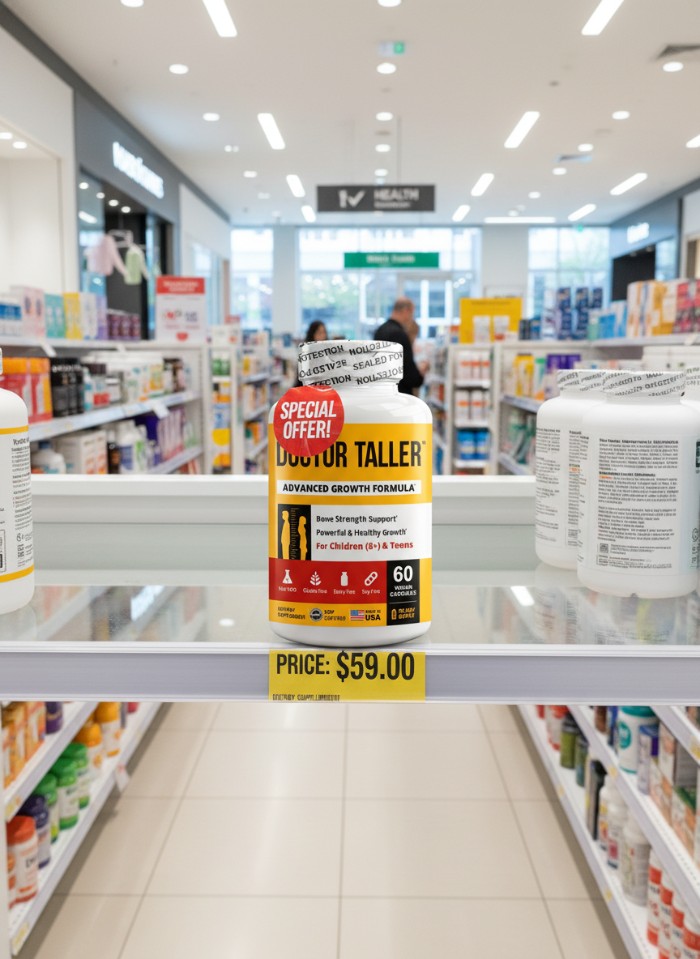
$59.00
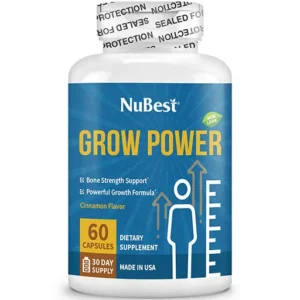
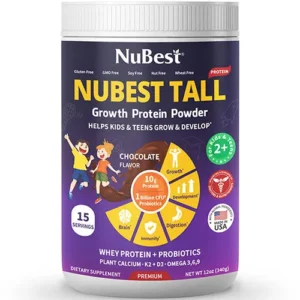
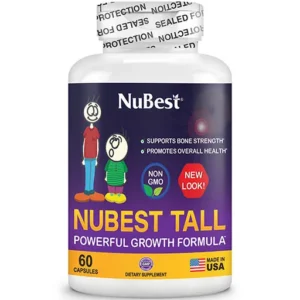
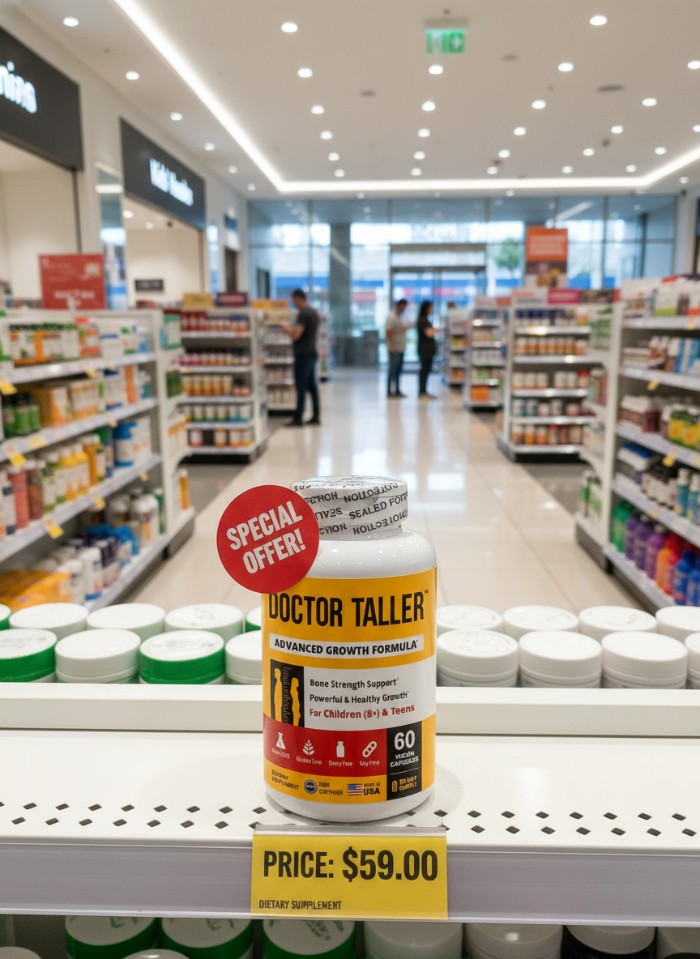
You ever catch yourself wondering if there’s really a way to support your kid’s growth—without spiraling into sketchy online rabbit holes or falling for gimmicky “miracle pills”? Yeah, same here. That’s exactly what got me looking into Doctor Taller, a height growth supplement by NuBest that’s been making quiet waves, especially here in the US market. It’s aimed at teenagers, packed with natural vitamins, and claims to support bone growth during those crucial years of adolescence (when nutrition gaps hit hardest).
Description
You probably know the moment. You’re standing with friends, maybe after basketball practice or in a hallway mirror at school, and you quietly wonder if you’re done growing… or if there’s still a little more height left in the tank.
That question drives a massive search trend in the United States. Every year, thousands of teens and young adults start looking into height supplements. And sooner or later, one name tends to pop up: Doctor Taller Supplement.
Now, supplements that promise height growth always create a mix of curiosity and skepticism. I’ve spent years studying height development, bone biology, and the supplement industry, and here’s the thing I’ve learned: height growth is real biology, not marketing magic.
But certain nutrients do matter.
So let’s break down what Doctor Taller Supplement actually is, how height growth works in your body, and where supplements realistically fit into the picture.
What Is Doctor Taller Supplement?
Doctor Taller Supplement is a dietary supplement marketed to support natural height growth by supplying nutrients associated with bone health and hormone activity.
You’ll usually see it advertised toward teenagers and young adults—people who are still in their growth years or who suspect they might not have reached their full height potential yet.
Most versions of the supplement promote a few core ideas:
- Supporting natural human growth hormone activity
- Improving bone density and skeletal strength
- Enhancing nutrient absorption
- Supporting overall skeletal development
On paper, those goals sound reasonable. Height growth depends heavily on nutrition and hormones. But there’s an important regulatory detail many people miss.
Under the Dietary Supplement Health and Education Act (DSHEA), products like Doctor Taller are classified as dietary supplements, not medical treatments. That means the U.S. Food and Drug Administration (FDA) does not evaluate them for effectiveness before they reach the market.
So the supplement can claim it “supports growth,” but it cannot legally claim it makes you grow taller.
That distinction might sound subtle… but biologically, it matters.
How Height Growth Actually Works in Your Body
When people talk about getting taller, they’re really talking about something happening deep inside the ends of their long bones.
Those areas are called growth plates (technically known as epiphyseal plates). You’ll find them at the ends of bones like the femur in your thigh and the tibia in your lower leg.
Here’s the simplified chain reaction.
- The pituitary gland releases growth hormone.
- That hormone signals your body to produce IGF-1 (Insulin-like Growth Factor-1).
- IGF-1 stimulates cells inside the growth plates.
- Those cells multiply and create new bone tissue.
Over time, that process slowly lengthens your bones.
It’s not fast. And it’s definitely not linear. Some teens grow three inches in a year, then barely half an inch the next.
But the biggest turning point comes when growth plates close.
For most people in the United States:
| Group | Typical Growth Plate Closure |
|---|---|
| Girls | Around ages 16–18 |
| Boys | Around ages 18–21 |
Once those plates fuse, bones can’t lengthen anymore. That’s simply how the skeletal system works.
And this is the point where many height supplements run into biological limits.
Ingredients Commonly Found in Height Supplements
Most height-support formulas—including Doctor Taller—use nutrients already known to support bone metabolism and hormonal balance.
You’ll often see combinations like this.
Calcium
Calcium directly supports bone density. Roughly 99% of the body’s calcium is stored in bones, which is why adequate intake during adolescence matters.
Without enough calcium, your body struggles to build strong bone structure.
Vitamin D3
Vitamin D3 helps your body absorb calcium efficiently. Without it, much of the calcium you consume simply passes through your digestive system.
In the United States, vitamin D deficiency is surprisingly common—especially in colder states where winter sunlight is limited.
L-Arginine
L-Arginine is an amino acid sometimes linked to growth hormone release. Research suggests certain amino acids can influence HGH levels, though the effect tends to be modest.
Zinc
Zinc supports metabolic processes and immune health. Studies also link zinc deficiency with slower growth in children.
Collagen or Bone Matrix Compounds
Some supplements add collagen peptides or bone-support compounds. These ingredients help support connective tissue and joint health, which indirectly supports skeletal structure.
You’ll actually find most of these nutrients in mainstream supplements from brands like:
- Nature Made
- NOW Foods
- Garden of Life
Doctor Taller simply packages them under a height-growth positioning.

Potential Benefits of Doctor Taller Supplement
Supplements rarely change your genetics. But they can support systems involved in growth.
Here are some areas where users sometimes notice benefits.
Nutritional Support
Many teenagers don’t meet their daily nutrient requirements.
Busy schedules, fast food, and inconsistent meals can lead to gaps in key minerals. A supplement can help fill those nutritional holes.
I’ve seen this especially with athletes. High activity levels increase nutrient demand, but their diets don’t always keep up.
Bone Health Support
Calcium and vitamin D help strengthen bones.
That doesn’t automatically make you taller, but stronger bones support proper skeletal development during growth years.
Hormone Support
Certain amino acids may support the body’s natural hormone production.
Notice the word support there. Supplements don’t inject hormones; they simply provide building blocks your body already uses.
Posture Improvements
This one surprises people.
Some users report looking slightly taller after improving posture. When the spine aligns properly and muscles support it better, slouching decreases.
You’re not actually growing new bone—but visually, it can add noticeable height.
Limitations of Height Supplements
Now here’s where reality usually settles in.
Height supplements have clear biological limits.
Genetics Controls Most Height
Research consistently shows that 60–80% of height variation comes from genetics.
If your parents are relatively tall, your probability of being tall increases. If they’re shorter, your biological range shifts downward.
Supplements don’t override that blueprint.
Growth Plate Closure Ends Bone Lengthening
Once growth plates close, the body loses its ability to extend bone length.
No supplement, vitamin, or nutrient can reopen them.
Marketing Often Overpromises
The Federal Trade Commission (FTC) has issued warnings to several supplement companies for exaggerated claims about height growth.
If a product promises guaranteed height increases for adults… that’s usually a red flag.
Supplements Are Not FDA-Approved Treatments
Dietary supplements in the U.S. operate under a different regulatory framework than medications.
Manufacturers are responsible for safety, but they don’t need FDA approval to sell the product.
That means research and ingredient quality vary widely.
Healthy Habits That Support Natural Height Growth
Interestingly, the biggest factors affecting height are not supplements at all.
They’re everyday habits.
Proper Nutrition
A balanced diet typically includes:
- Lean protein sources
- Calcium-rich foods like dairy
- Fruits and vegetables
- Whole grains
Protein provides amino acids needed for tissue growth, while minerals support bone formation.
Quality Sleep
Growth hormone is released primarily during deep sleep cycles.
Teenagers generally function best with 8–10 hours of sleep per night, though schedules and school demands sometimes make that difficult.
Physical Activity
Activities that promote spinal mobility and muscle strength can help posture and skeletal development.
Examples include:
- Basketball
- Swimming
- Stretching routines
These activities won’t stretch bones longer, but they support the musculoskeletal system.
Good Posture
Slouching compresses the spine over time.
Maintaining proper posture keeps the spine aligned and prevents the subtle height loss that comes from poor alignment.
Are Height Supplements Popular in the United States?
The supplement industry in the United States is enormous.
Americans spend more than $50 billion per year on dietary supplements, according to industry market reports.
Height-growth products represent a smaller niche, but interest keeps growing.
You tend to see demand spikes among:
- Teenagers approaching growth milestones
- Young athletes hoping to improve performance
- Fitness enthusiasts focused on body optimization
Search traffic often increases during summer sports seasons and before back-to-school periods.
That timing makes sense. Growth and athletic performance tend to dominate those conversations.
Should You Try Doctor Taller Supplement?
Doctor Taller Supplement provides nutrients linked to bone health, metabolism, and hormone support. For people who lack those nutrients in their daily diet, supplementation can help close that gap.
But height itself still depends largely on age, genetics, and growth plate status.
If you’re still in your growth years—typically your mid-teens to early twenties for males—nutrition, sleep, and physical activity play a much larger role than any supplement.
And honestly, that’s the pattern I’ve noticed again and again. The people who maximize their height potential rarely rely on one product. Instead, they combine consistent habits: solid nutrition, good sleep, and active lifestyles.
Supplements can fit into that equation.
They just don’t replace the biology already running the show.
Content missing