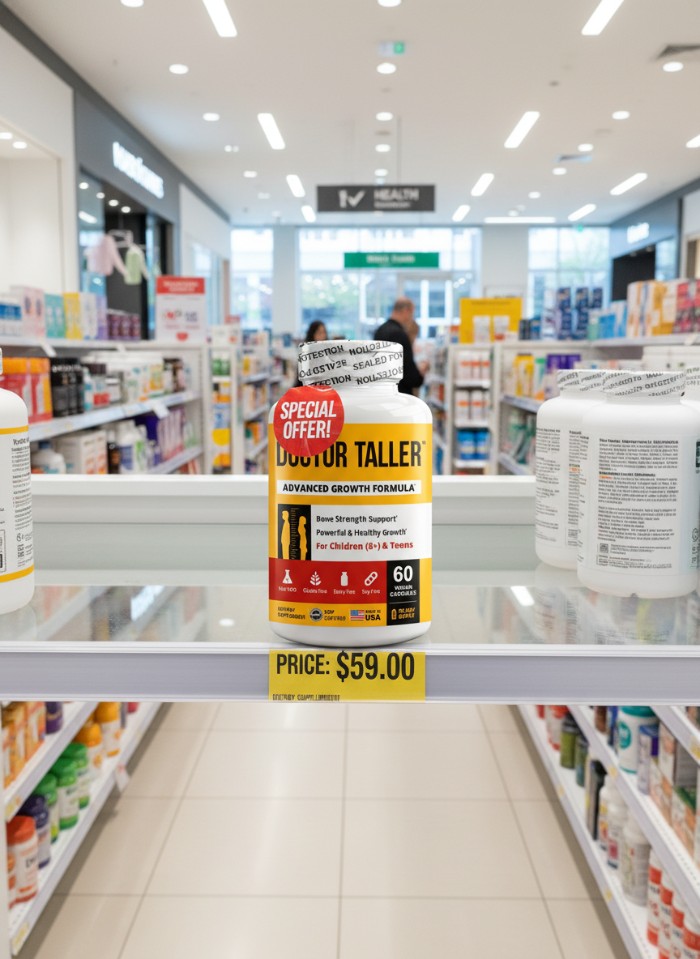
$59.00
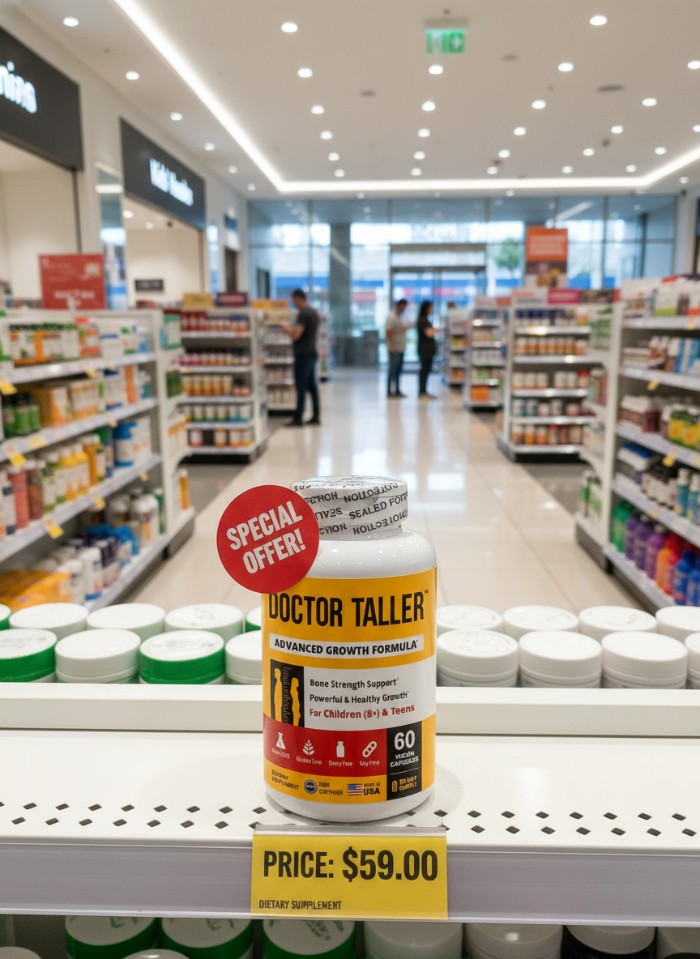
You ever catch yourself wondering if there’s really a way to support your kid’s growth—without spiraling into sketchy online rabbit holes or falling for gimmicky “miracle pills”? Yeah, same here. That’s exactly what got me looking into Doctor Taller, a height growth supplement by NuBest that’s been making quiet waves, especially here in the US market. It’s aimed at teenagers, packed with natural vitamins, and claims to support bone growth during those crucial years of adolescence (when nutrition gaps hit hardest).
Description
There’s a moment a lot of people recognize. You’re glancing at a mirror after gym class, or standing back-to-back with a friend just to check—and somewhere in the back of your mind, you start wondering whether you’ve got more growing left to do, or whether that ship has already sailed.
That quiet curiosity turns into a Google search pretty fast. And somewhere in those results, Doctor Taller Supplement tends to show up. Height supplements as a category always attract a mix of genuine interest and healthy skepticism, which is fair. The biology here is real, but so are the limits.
Here’s what actually matters: certain nutrients genuinely do play a role in how your body develops during growth years. That’s not marketing language—it’s basic physiology. But what a supplement can realistically do versus what the label implies are often two different conversations.
What Is Doctor Taller Supplement?
Doctor Taller Supplement is a dietary supplement designed to support natural height development by providing nutrients associated with bone health and hormonal activity.
It’s mostly marketed toward teenagers and young adults—people who are either still in active growth phases or who feel they may not have hit their full height potential yet. The core claims you’ll usually see on the label tend to cluster around a few ideas:
- Supporting your body’s natural growth hormone activity—not replacing it, but giving it the raw materials it needs
- Improving bone density and overall skeletal strength during development
- Helping your body absorb key nutrients more efficiently
- Contributing to broader skeletal support during growth years
Those goals aren’t unreasonable on the surface. Growth really does depend heavily on nutrition and hormones. But there’s a regulatory detail worth knowing before you read too much into the claims.
Under the Dietary Supplement Health and Education Act (DSHEA), products like Doctor Taller are classified as dietary supplements—not medical treatments. That means the FDA doesn’t evaluate them for effectiveness before they hit shelves. So a supplement can legally say it “supports growth.” It cannot legally say it makes you grow taller.
That distinction sounds small. Biologically, it’s not.
How Height Growth Actually Works in Your Body
When someone talks about “still growing,” what’s actually happening is inside the ends of your long bones—areas called growth plates (the technical term is epiphyseal plates). You’ll find them at the ends of bones like your femur (thigh) and tibia (lower leg).
The chain reaction goes roughly like this:
- Your pituitary gland releases growth hormone.
- That hormone triggers production of IGF-1 (Insulin-like Growth Factor-1).
- IGF-1 activates cells sitting inside the growth plates.
- Those cells multiply and lay down new bone tissue.
Over time, that process extends your bones. It’s slow. It’s not linear. Some teens shoot up three inches in a single year and then barely move the needle the next.
The real turning point, though, is when growth plates close. Once that happens, bones simply can’t lengthen anymore—that’s not a supplement problem, that’s just how the skeletal system is built.
For most people in the United States:
| Group | Typical Growth Plate Closure |
|---|---|
| Girls | Around ages 16–18 |
| Boys | Around ages 18–21 |
This is exactly where height supplements run into hard biological walls—and where the marketing tends to quietly gloss over the fine print.
Ingredients Commonly Found in Height Supplements
Most height-support formulas, Doctor Taller included, pull from a fairly consistent ingredient list. These are nutrients already connected to bone metabolism and hormonal balance—nothing exotic.
Calcium
Calcium is the foundation. Roughly 99% of your body’s calcium lives in your bones, which tells you how essential adequate intake is during adolescence. Without enough of it, building strong bone structure gets harder—full stop.
Vitamin D3
Vitamin D3 is what makes calcium absorption actually work. Skip it, and a lot of the calcium you eat just passes through without doing much. Vitamin D deficiency turns out to be surprisingly common in the U.S., especially in colder northern states where winter sun exposure is limited for months at a time.
L-Arginine
L-Arginine is an amino acid sometimes connected to growth hormone release. Some research suggests certain amino acids can nudge HGH levels—but the effect tends to be modest, not dramatic. Worth keeping in perspective.
Zinc
Zinc supports metabolic function and immune health. Studies have also linked zinc deficiency specifically to slower growth rates in children—so it’s not just a filler ingredient.
Collagen or Bone Matrix Compounds
Some formulas include collagen peptides or bone-support compounds. These help maintain connective tissue and joint health, which indirectly supports how your skeletal system holds up over time.
Worth noting: you’ll find most of these same nutrients in mainstream supplement lines from brands like Nature Made, NOW Foods, or Garden of Life. Doctor Taller essentially packages them under a height-growth framing—which changes the marketing story more than the actual chemistry.

Potential Benefits of Doctor Taller Supplement
Supplements don’t rewrite your genetics. But they can support systems that are actively involved in growth—and that matters more than it sounds for certain people.
Nutritional Support
Plenty of teenagers don’t consistently hit their daily nutrient requirements. Busy schedules, irregular meals, and a lot of fast food create real gaps in key minerals. A supplement can help fill those gaps—not dramatically, but practically.
- Athletes are a clear example here: high activity levels increase nutrient demand, but their diets don’t always scale up to match
- Teens with restrictive diets—by choice or circumstance—often run low on calcium and zinc without realizing it
- Even generally healthy eaters can have seasonal vitamin D dips, particularly through winter months
Bone Health Support
Calcium and vitamin D support stronger bones during development. That doesn’t automatically translate to additional height—but stronger bones do support proper skeletal development while growth is still happening.
Hormone Support
Certain amino acids may support the body’s natural hormone production. The word support matters here. Supplements don’t deliver hormones—they give your body the raw materials it already uses to produce them on its own schedule.
Posture Improvements
This one surprises people. Some users report looking noticeably taller after their posture improves—not because new bone formed, but because slouching was quietly compressing their spine. When alignment improves and muscles support it properly, the visual difference is real, even if the bone length isn’t changing.
Limitations of Height Supplements
Here’s where reality settles in. Height supplements have genuine uses—but also clear biological ceilings.
Genetics Controls Most Height
Research consistently puts 60–80% of height variation down to genetics. Your parents’ height shapes your biological range. Supplements don’t override that blueprint—they work within it, at best.
Growth Plate Closure Ends Bone Lengthening
Once growth plates fuse, bones lose the ability to extend. No supplement, no vitamin stack, no nutrient protocol reopens them. That’s just anatomy.
Marketing Often Overpromises
The Federal Trade Commission (FTC) has issued warnings to multiple supplement companies for exaggerated height-growth claims. If a product promises guaranteed height increases for adults in their late twenties—that’s a red flag, not a selling point.
Supplements Are Not FDA-Approved Treatments
Dietary supplements in the U.S. operate under a different regulatory framework than medications. Manufacturers are responsible for safety, but FDA approval isn’t required before a product sells. Ingredient quality and research backing vary a lot across brands as a result.
Healthy Habits That Support Natural Height Growth
Interestingly, the factors with the most consistent influence on height aren’t supplements at all. They’re things happening (or not happening) every day.
Proper Nutrition
A diet that actually supports growth tends to include:
- Lean protein sources, which supply amino acids for tissue building
- Calcium-rich foods—dairy, leafy greens, fortified alternatives
- A range of fruits and vegetables for micronutrient coverage
- Whole grains for sustained energy and mineral content
Protein is particularly underrated here. Amino acids are the structural building blocks for tissue growth, and a lot of teenagers run lower on protein than they think.
Quality Sleep
Growth hormone is released primarily during deep sleep cycles. Teenagers generally need 8–10 hours per night, though school schedules and screens make that harder than it sounds. Chronic sleep debt during growth years isn’t neutral—it has a real effect on hormonal output.
Physical Activity
Activities that build spinal mobility and muscle strength tend to support posture and overall skeletal health. Basketball, swimming, and regular stretching routines all fit that profile. These don’t stretch bones longer, but they support the musculoskeletal system in ways that matter during development.
Good Posture
Slouching compresses the spine over time—sometimes noticeably. Maintaining proper alignment keeps the spine in its natural position and prevents the subtle height loss that builds up from years of poor posture habits.
Are Height Supplements Popular in the United States?
The U.S. supplement industry is enormous—Americans spend more than $50 billion per year on dietary supplements, according to industry market reports. Height-growth products are a smaller niche within that, but demand keeps growing steadily.
You tend to see spikes in interest around specific windows:
- Teenagers hitting key growth milestones and suddenly becoming aware of where they stand relative to peers
- Young athletes looking for any edge in performance or physical development
- Fitness-focused people optimizing their overall body composition and health
Search traffic for height supplements tends to spike during summer sports seasons and just before back-to-school periods. Those are times when height and athletic performance naturally come up in conversation—and curiosity follows.
Should You Try Doctor Taller Supplement?
Doctor Taller provides nutrients linked to bone health, metabolism, and hormone support. For someone who’s not consistently hitting those nutrient targets through diet alone, supplementation can close that gap in a practical way.
But height still comes down largely to age, genetics, and growth plate status—and no supplement changes that equation in a fundamental way.
If you’re still in active growth years—roughly mid-teens through early twenties for males—nutrition, sleep, and physical activity carry far more weight than anything in a bottle. What tends to happen with people who maximize their height potential is less about any single product and more about consistent habits over time: eating well, sleeping enough, staying active.
Supplements can fit into that picture. They just don’t run it.
Content missing